
Dichotomous keys are vital tools in biology‚ aiding organism identification through paired statements. Students practice observation and recording‚ utilizing keys for classification.
What is a Dichotomous Key?
A dichotomous key is a crucial tool utilized by biologists‚ representing a series of paired statements designed to identify organisms. Each statement presents two mutually exclusive choices‚ forcing the user to select the option that most accurately describes the specimen under investigation. This process of elimination‚ guided by observable characteristics‚ progressively narrows down the possibilities until a definitive identification is reached.
Essentially‚ it’s a step-by-step guide‚ where each choice leads to another pair of statements‚ ultimately culminating in the correct classification. Understanding how these keys function is fundamental to grasping biological classification methods and practicing careful observation skills.
Why are Dichotomous Keys Used in Biology?
Dichotomous keys are indispensable in biology because they provide a standardized method for identifying organisms‚ crucial for research‚ conservation‚ and understanding biodiversity. They enable scientists to accurately classify living things‚ even with limited expertise‚ by focusing on observable traits. This systematic approach minimizes subjectivity and ensures consistent results across different researchers and locations.
Furthermore‚ using these keys enhances observational skills and promotes a deeper understanding of organismal characteristics. They are particularly valuable when dealing with a large number of specimens or when rapid identification is required‚ streamlining biological studies and monitoring efforts.

Understanding the Structure of a Dichotomous Key
Dichotomous keys rely on paired‚ mutually exclusive statements describing characteristics. Accurate identification depends on carefully selecting the statement that best fits the organism.
Paired Statements: The Core of the Key
Dichotomous keys fundamentally operate on paired statements‚ presenting users with two contrasting choices at each step. These statements are designed to highlight distinct characteristics of the organisms being identified. Biologists construct these keys by carefully analyzing observable traits‚ ensuring each pair offers a clear divergence.
Each statement focuses on a specific feature – it could be physical attributes like color or shape‚ or behavioral characteristics. The user then determines which statement accurately describes the specimen. This process of elimination continues‚ leading progressively closer to the correct identification. The effectiveness of a key hinges on the precision and clarity of these paired descriptions.
Mutually Exclusive Choices
A cornerstone of effective dichotomous keys is the principle of mutually exclusive choices. Each paired statement must be designed so that only one accurately describes the organism in question. Overlap or ambiguity renders the key useless‚ leading to incorrect identifications. Biologists meticulously craft statements to avoid such pitfalls‚ ensuring a clear “either/or” scenario.
This exclusivity is crucial for the logical progression of the key. If a characteristic could conceivably fit both statements‚ the key breaks down. Therefore‚ careful wording and precise observation are paramount. The goal is to present options that are demonstrably different‚ guiding the user towards a definitive conclusion with each selection.
How to Effectively Read and Use a Dichotomous Key
Successfully navigating a dichotomous key demands a systematic approach. Begin by carefully reading both statements in the first pair. Determine which statement best matches the characteristics of the unknown organism. Proceed to the indicated number or next step. Repeat this process‚ meticulously observing and comparing‚ until you arrive at a final identification.
Avoid assumptions; base your choices solely on observable traits. Record your selections systematically to track your path and prevent errors. If you reach a point where neither statement fits‚ re-examine your observations or consider the possibility of variation within the species. Patience and precision are key to accurate identification.

Dichotomous Key Worksheet Applications
Worksheets enhance understanding by applying dichotomous keys to identify invertebrates‚ classify organisms based on traits‚ and pinpoint plant species effectively.
Identifying Invertebrate Animals
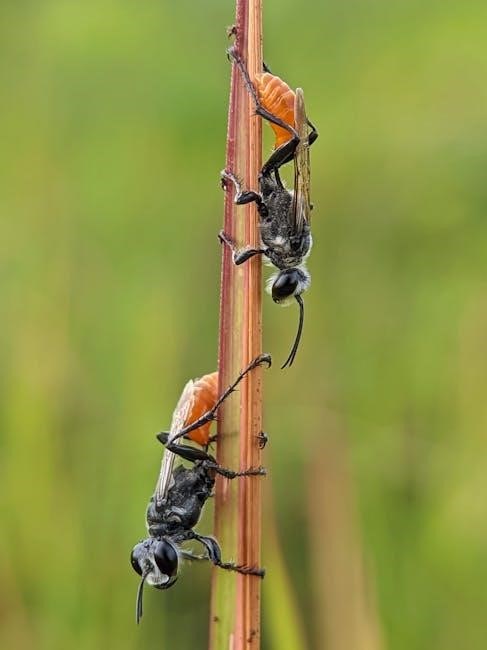
Dichotomous key worksheets frequently focus on invertebrate animal identification‚ providing a practical application of classification skills. These exercises often include photographs of diverse invertebrates – insects‚ worms‚ mollusks‚ and crustaceans – requiring students to meticulously observe and record characteristics. The keys guide users through paired statements‚ prompting choices based on observable traits like body segmentation‚ presence of appendages‚ or shell composition.
Students learn to navigate these paired choices systematically‚ ultimately arriving at the correct identification of the invertebrate. This process reinforces understanding of invertebrate diversity and the importance of precise observation in biological studies. The provided document specifically mentions identifying invertebrate classes and their defining characteristics using these keys.
Classifying Organisms Based on Observable Traits
Dichotomous keys excel at classifying organisms by focusing on readily observable traits. Worksheets emphasize this skill‚ prompting students to analyze characteristics like physical features‚ body structures‚ and behavioral patterns. These traits form the basis of paired statements within the key‚ demanding careful observation and accurate recording of data.
The process isn’t about memorizing names‚ but mastering the use of keys – a skill honed through practice; Students learn that proficiency increases with dedicated “keying” of organisms. Worksheets provide structured practice‚ building confidence in identifying organisms based solely on their visible attributes‚ a cornerstone of biological classification.
Using Dichotomous Keys for Plant Identification
Dichotomous keys are exceptionally useful for plant identification‚ leveraging observable characteristics like leaf shape‚ flower color‚ stem structure‚ and arrangement. Worksheets dedicated to plants guide students through this process‚ fostering a deeper understanding of botanical diversity. Identifying plants requires meticulous attention to detail‚ as subtle differences can signify distinct species.
These exercises aren’t about rote memorization; they’re about developing the skill of using keys effectively. Students learn to systematically analyze traits and navigate the paired statements‚ ultimately arriving at a plant’s correct identification. Consistent practice with plant-specific worksheets builds confidence and analytical abilities.
Creating Your Own Dichotomous Key
Constructing dichotomous keys involves selecting relevant characteristics and formulating clear‚ concise statements. Testing and refining ensures accuracy for effective organism classification.
Choosing Relevant Characteristics
Selecting appropriate characteristics is paramount when crafting a dichotomous key. These traits must be consistently observable and demonstrably different between the organisms you aim to classify. Avoid ambiguous features prone to variation‚ as they introduce uncertainty into the identification process. Focus on stable morphological traits – physical attributes – or easily discernible behavioral patterns.
Consider characteristics that distinctly separate groups at each branching point of the key. For instance‚ presence or absence of wings‚ number of legs‚ or leaf shape are useful distinctions. The chosen characteristics should be mutually exclusive‚ meaning an organism can only possess one option from each paired statement. Careful selection ensures a logical and accurate pathway to identification‚ ultimately leading to reliable classification results.
Formulating Clear and Concise Statements
Precision is key when writing paired statements for a dichotomous key. Each statement must be unambiguous‚ using direct language and avoiding jargon. Phrase options as contrasting characteristics – “leaves present” versus “leaves absent‚” not subjective descriptions. Keep statements brief and focused‚ ensuring they address a single‚ easily observable trait.
Avoid using terms like “large” or “small” without quantifiable measurements. Instead‚ specify exact numbers or ranges. Statements should lead the user down a clear path‚ eliminating guesswork. Consistency in grammatical structure aids readability. Well-crafted statements minimize errors and ensure accurate identification‚ making the key accessible and effective for all users.
Testing and Refining Your Key
Thorough testing is crucial for a reliable dichotomous key. Use specimens not used during creation to identify them with your key. If identification fails‚ analyze where the process breaks down – is a statement ambiguous‚ or a characteristic misinterpreted? Revise problematic statements for clarity and accuracy.
Repeat testing with diverse specimens‚ noting any inconsistencies. A key’s effectiveness reflects the time invested in refinement. Consider feedback from others; a fresh perspective can reveal flaws. Iterative testing and revision ensure the key accurately identifies organisms‚ minimizing errors and maximizing its practical value for biological classification.

Dichotomous Key Worksheet Examples
Worksheets offer practical application‚ featuring animal‚ plant‚ and invertebrate classifications. These exercises enhance understanding of observable traits and identification processes using keys.
Animal Dichotomous Key Worksheets
Animal dichotomous key worksheets present a fantastic opportunity for students to hone their classification skills‚ specifically focusing on the diverse animal kingdom. These resources typically feature a series of paired statements describing physical characteristics – such as presence or absence of fur‚ number of legs‚ or type of skeletal structure – guiding users through the identification process.
Often‚ these worksheets include images of various animals‚ challenging students to carefully observe and compare traits. The practical application reinforces understanding of biological classification and encourages meticulous attention to detail. Many worksheets also incorporate a “keying out” exercise‚ where students utilize a provided key to determine the scientific classification of unknown specimens. These are excellent tools for reinforcing concepts learned in biology classes.
Plant Dichotomous Key Worksheets
Plant dichotomous key worksheets offer a focused approach to understanding botanical classification. These resources utilize paired‚ contrasting statements describing plant characteristics – leaf shape‚ flower color‚ stem type‚ or presence of fruits – to guide identification. Students learn to systematically analyze observable traits‚ developing critical thinking and observational skills.
Worksheets frequently include illustrations or photographs of various plant species‚ prompting careful comparison and trait assessment. The process of “keying out” plants using a provided key reinforces understanding of taxonomic principles. These exercises aren’t about memorization‚ but about applying a logical process. They are valuable tools for biology students and budding botanists alike‚ fostering a deeper appreciation for plant diversity.
Invertebrate Dichotomous Key Worksheets
Invertebrate dichotomous key worksheets provide practical experience in classifying animals lacking a backbone. These resources typically present paired statements focusing on observable characteristics like body segmentation‚ presence of wings‚ leg number‚ or shell type. Students utilize these keys to identify various invertebrate classes – insects‚ arachnids‚ crustaceans‚ and more – through a process of elimination.
Many worksheets incorporate images of invertebrates‚ enhancing the identification process and promoting visual learning. The exercises emphasize careful observation and accurate recording of traits. These tools aren’t simply about finding the “right answer‚” but about understanding the logical framework of classification and honing scientific reasoning skills‚ crucial for biology students.

Common Challenges and Solutions
Ambiguous characteristics or overlapping traits can hinder identification. Careful re-examination of specimens and key statements‚ alongside acknowledging species variation‚ resolves issues.
Ambiguous Characteristics
Ambiguous characteristics present a significant hurdle when utilizing dichotomous keys. Often‚ descriptions within the key aren’t precise enough‚ leading to subjective interpretations. For instance‚ terms like “large” or “small” lack quantifiable measures‚ causing confusion during identification. Students must carefully consider the context and potentially consult additional resources to clarify these vague descriptors.
When encountering ambiguity‚ revisiting the original specimen for re-observation is crucial. Detailed notes and‚ if possible‚ photographic documentation can aid in objective assessment. Furthermore‚ comparing the specimen to known examples or seeking guidance from experienced biologists can resolve uncertainties. Recognizing the limitations of the key and acknowledging potential errors are also vital skills.
Overlapping Traits
Overlapping traits pose a challenge in dichotomous key usage‚ as some organisms exhibit characteristics fitting both statements within a pair. This often occurs due to natural variation or evolutionary relationships. For example‚ an invertebrate might possess features partially aligning with two different classes‚ hindering definitive classification.
When faced with overlapping traits‚ careful consideration of all characteristics is essential‚ not just the problematic pair. Prioritizing the most consistent and unambiguous traits can guide the identification process. Consulting multiple resources or expert opinions can also help resolve discrepancies. Recognizing that some organisms may not fit neatly into pre-defined categories is a crucial aspect of biological classification.
Dealing with Variation Within Species
Variation within a single species presents a significant hurdle when employing dichotomous keys. Individuals can exhibit differences in size‚ color‚ or other traits due to genetics‚ age‚ or environmental factors. These variations might lead to misidentification if the key relies heavily on a single characteristic;
To address this‚ keys should ideally account for a range of typical variations. Users must recognize that not every individual will perfectly match the key’s description; Considering multiple characteristics and understanding the species’ known variability are crucial. Sometimes‚ further investigation‚ like microscopic examination‚ is needed to resolve ambiguities arising from intraspecies variation.

Dichotomous Keys vs. Other Classification Methods
Dichotomous keys differ from taxonomic classification and phylogenetic trees‚ offering a practical identification tool based on observable traits‚ unlike evolutionary relationships.
Taxonomic Classification
Taxonomic classification establishes a hierarchical system for categorizing organisms‚ reflecting evolutionary relationships. Unlike dichotomous keys‚ which focus on identifying specific organisms based on observable characteristics‚ taxonomy aims to group organisms based on shared ancestry and genetic similarities. This system‚ utilizing levels like kingdom‚ phylum‚ class‚ order‚ family‚ genus‚ and species‚ provides a broader understanding of biodiversity. While dichotomous keys are practical for identification‚ taxonomy provides the framework for understanding the ‘big picture’ of life’s organization. It’s a more comprehensive‚ though often complex‚ approach to understanding biological diversity‚ requiring extensive study and analysis beyond simple observation.
Phylogenetic Trees
Phylogenetic trees visually represent the evolutionary history and relationships among organisms‚ differing significantly from dichotomous keys. These ‘trees’ depict branching patterns illustrating common ancestors and divergence over time‚ often based on genetic data. Unlike keys‚ which aid in identification through observable traits‚ phylogenetic trees infer relationships based on evolutionary history. They demonstrate how species have evolved from shared ancestors‚ showcasing patterns of descent with modification. While dichotomous keys provide a practical identification tool‚ phylogenetic trees offer a deeper understanding of the evolutionary connections between all living things‚ providing a historical context for biodiversity.

Resources for Dichotomous Key Worksheets (PDF)
Numerous online databases and educational websites offer printable dichotomous key worksheets in PDF format‚ supporting student learning and scientific exploration.
Online Databases and Repositories
Several online platforms serve as valuable repositories for dichotomous key worksheets‚ often available as downloadable PDF files. These resources frequently categorize worksheets by subject – such as plants‚ animals‚ or invertebrates – and difficulty level‚ catering to diverse educational needs. Many university biology departments maintain open-access collections of worksheets used in their introductory courses.
Furthermore‚ dedicated educational websites specializing in science resources consistently update their offerings with new and revised dichotomous key materials. These sites often include answer keys for self-assessment‚ enhancing the learning experience. Exploring these databases provides educators and students with a wealth of options for practicing classification skills and deepening their understanding of biological diversity. Remember to verify the source and accuracy of any downloaded materials.
Educational Websites
Numerous educational websites offer freely accessible dichotomous key worksheets‚ frequently in PDF format‚ designed to support biology education. These platforms often present worksheets alongside interactive tutorials and explanatory content‚ fostering a comprehensive learning experience. Websites like Biology Corner and K12Worksheets provide curated collections categorized by organism type and complexity.
Many sites also include answer keys‚ allowing students to independently verify their classifications and identify areas for improvement. These resources are particularly valuable for remote learning or supplemental practice. Teachers can readily integrate these materials into their lesson plans‚ enhancing student engagement and reinforcing key concepts related to biological classification and identification skills.
Printable Worksheet Collections
Several websites specialize in compiling printable worksheet collections‚ including a wide array of dichotomous key exercises often available as PDF downloads. These collections cater to diverse educational levels‚ from introductory biology to more advanced studies. Platforms like Science Spot and Teachers Pay Teachers host numerous options‚ frequently categorized by subject matter – plants‚ animals‚ invertebrates‚ and more.
These resources often include answer keys for self-assessment and teacher convenience. Printable worksheets offer a tangible learning experience‚ allowing students to practice classification skills offline. They are ideal for classroom activities‚ homework assignments‚ or supplemental learning‚ reinforcing understanding of organism identification techniques.

Tips for Success with Dichotomous Key Worksheets
Careful observation and systematic recording of choices are crucial. Don’t hesitate to restart if needed; proficiency grows with practice using dichotomous keys.
Careful Observation is Key
Successfully utilizing dichotomous keys hinges on meticulous observation of the organism in question. Students must closely examine each characteristic presented in the paired statements‚ ensuring accurate assessment. Ignoring subtle details can lead to misidentification and incorrect pathway selection within the key.
Remember‚ dichotomous keys rely on precise descriptions; a slight oversight in observation can derail the entire process. Encourage students to use magnification tools when necessary and to document their observations thoroughly. This practice reinforces the importance of detail-oriented work in scientific inquiry‚ building a foundation for future biological investigations.
Record Your Choices Systematically
Maintaining a clear and organized record of your decisions while using a dichotomous key is crucial for accuracy and troubleshooting. Students should document each step‚ noting the statement number chosen and the resulting pathway. This systematic approach allows for easy backtracking if a mistake is made‚ preventing wasted time and frustration.
A well-maintained record also facilitates understanding of the key’s logic and reinforces the classification process. Encourage students to create a simple flowchart or numbered list to track their choices. This practice promotes analytical thinking and strengthens their ability to interpret and apply scientific methodologies effectively.
Don’t Be Afraid to Start Over
Encountering a roadblock while using a dichotomous key is a common experience‚ especially for beginners. If you reach a point where the statements no longer accurately describe your specimen‚ don’t hesitate to revisit the beginning and start the process anew. This isn’t a sign of failure‚ but rather a valuable learning opportunity.
Carefully re-examine the organism’s characteristics and ensure accurate observation. Sometimes‚ a subtle detail was initially overlooked. Starting over with a fresh perspective can often lead to a successful identification. Remember‚ proficiency with keys improves with practice and a willingness to learn from mistakes.

Advanced Dichotomous Key Concepts
Nested keys offer increasing specificity‚ while polyclave keys allow multiple characteristics to be considered simultaneously‚ enhancing identification complexity and accuracy.
Nested Keys
Nested dichotomous keys represent a hierarchical system‚ where each choice leads to another set of paired statements‚ progressively narrowing down possibilities. This structure resembles branching pathways‚ offering increasing detail with each step. Unlike a single‚ linear key‚ nested keys allow for more complex classifications‚ particularly useful when dealing with diverse organisms.
Imagine a key where the first choice separates organisms based on broad characteristics – like presence or absence of a backbone. Subsequent choices then focus on more specific traits within each group‚ such as limb structure or leaf type. This layering creates a ‘nested’ effect‚ refining identification with each decision. Utilizing nested keys requires careful attention to detail and systematic progression through the branching pathways to arrive at the correct identification;
Polyclave Keys
Polyclave keys differ significantly from traditional dichotomous keys by presenting multiple choices at each step‚ rather than just two. This allows for greater flexibility when characteristics aren’t strictly binary – offering options like “small‚” “medium‚” or “large.” Instead of following a single branching path‚ users can select all applicable characteristics‚ leading to a more efficient identification process.
These keys are particularly useful when dealing with variable traits or organisms exhibiting a wide range of characteristics. While more complex to construct‚ polyclave keys can be more accurate and user-friendly‚ especially for individuals unfamiliar with precise biological terminology. They require careful consideration of all observed traits to narrow down possibilities effectively.